

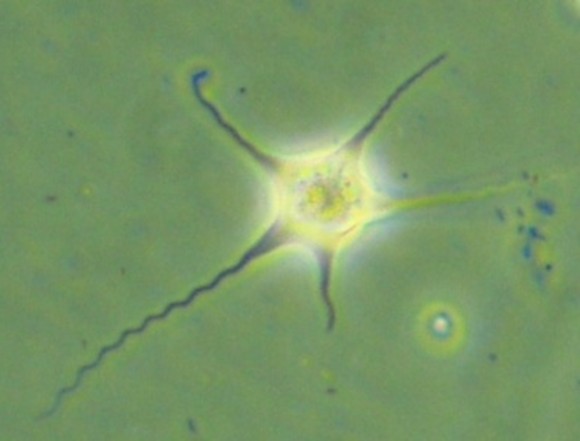
Experiments conducted at the Industrial Laboratory (ILAB) show that the disinfectant ECA Aqua, developed by HL Skjong, can inactivate the amoeba Paramoeba perurans, which causes amoebic gill disease (AGD) in Atlantic salmon.
AGD is a challenge for the aquaculture industry internationally and has become an established disease in Norway since it was first reported in 2013. The disease is currently treated mainly with freshwater baths, while hydrogen peroxide is also effective against the disease.
On behalf of HL Skjong, ILAB conducted two in vitro laboratory experiments to investigate the effect of ECA Aqua directly on the gill amoeba Paramoeba perurans. Several concentrations and different exposure times were tested.
Clear effect in both experiments
The results from the experiments showed a clear reduction in amoeba growth following treatment with ECA Aqua.
In experiments with attached amoebae, no live amoebae were observed after 60 minutes of treatment. After 10 minutes of exposure, all amoebae died at the highest concentration.
In another experiment, where the amoebae were exposed to ECA Aqua in circulating water, no live or attached amoebae were observed – even at the lowest tested concentration and shortest exposure time.
No new amoeba growth was observed in the cultures during the following 14 days, while the control groups developed significant growth.
Relevant for disinfection in production environments
The results indicate that ECA Aqua may have potential as a disinfectant in aquaculture, particularly for surface disinfection in production environments where amoebae can survive on equipment and contact surfaces.
This may include, for example, the cleaning of tanks, fish tanks, water lines and other production equipment. The product may also be suitable for circulation in tanks and piping systems, which may be relevant in facilities aiming to reduce the risk of spreading amoebae between production units.
Further testing in operational environments will be necessary to determine optimal dosing and practical application in the field.
See also the post about this case on ILAB’s LinkedIn page.
